


Issuing (sales) credit notes is essentially the same process as issuing invoices, with only slight alterations. You may issue sales credit notes in case:
- you wish to cancel an already issued sales document.
- your clients return a sale or you want to apply a discount on invoiced goods.
- you wish to give your client a refund.
As with invoices, you can create multiple series of credit notes, attach files and view helpful reports. Review the fields that appear when you add.
Suppose you have issued an invoice and your customer returns part of the order back prior to payment. You need to issue a credit note for the returned items and also reduce the customer's balance in the system.
To create a credit note from the main menu select ... More > Credit notes > Add.
Add a credit note
Most fields to fill-in are similar to the invoice adding process. First, select the client so that the other fields are activated.
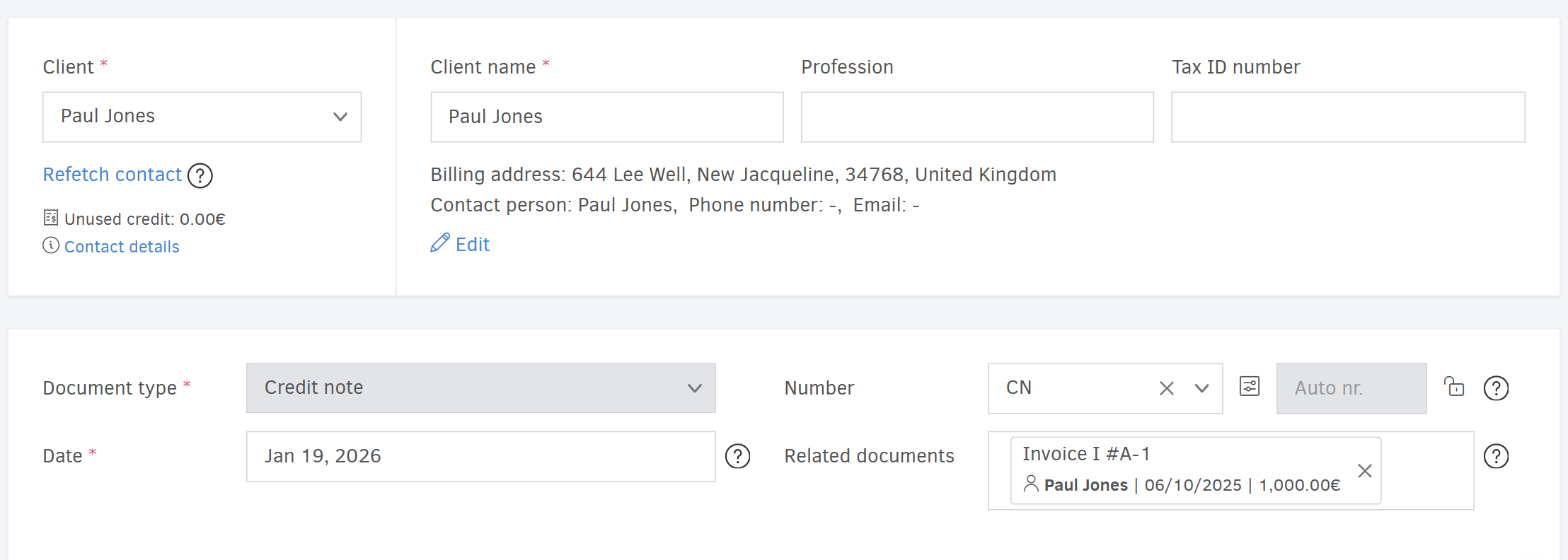
In the optional Related documents field, you can link one or more documents that have been issued to the specific client. The related documents will also appear on the printable version of the credit note you create. However, this does not indicate that the amounts of the two documents have been offset.
- Credit invoice–Delivery note: To issue a credit invoice that also functions as a delivery note, you must first add this specific document type by navigating to Settings > Document types > Add > Credit notes, type the title and check the box.
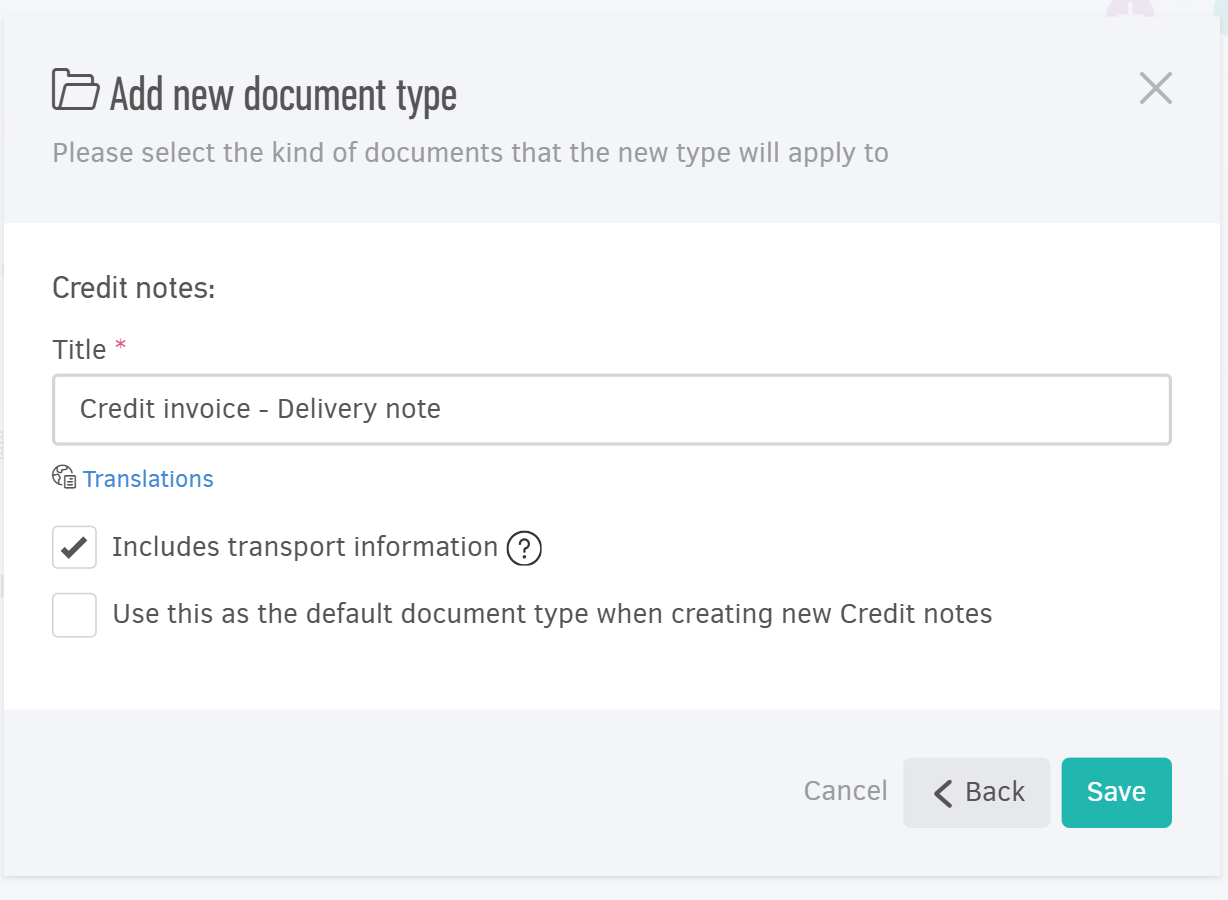
The Credit Invoice–Delivery Note includes dispatch information (date, time, purpose, etc.). Please note that the loading address and the shipping address are reversed, compared to sales invoices.
- Retail Sales Credit Note-Delivery Note: For retail sales, you might need to add a new document type in Credit notes, following the same steps.
Currency
Elorus uses your organization base currency as default. In case you have set a default currency for your client, inside the contact, this gets priority and gets automatically selected. You may still set a different currency for any invoice individually from the pen icon.

Note that Elorus supports multiple currencies, so any selection above is not restrictive for future invoices issued to the same client.
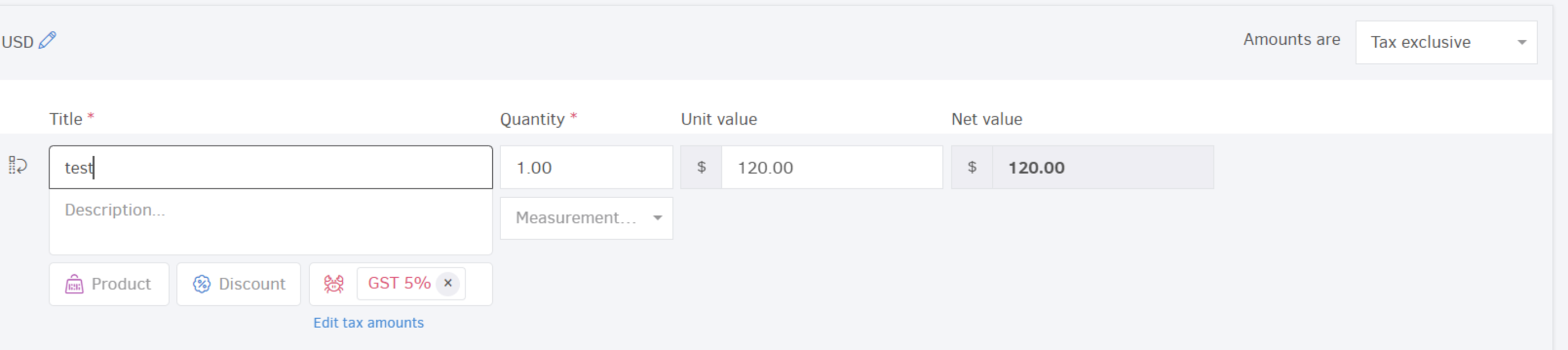
Amounts are: Calculator mode
From the Amounts are field, you can decide how Elorus will calculate taxes for your products/services:
- Tax exclusive: The user enters the unit price (net price); taxes and discounts are calculated separately.
- Tax inclusive, after discounts: User enters the final unit price, with taxes and discounts already included.
- Tax inclusive, before discounts: User enters the gross unit price (including tax); discounts are then applied separately.
For more information please visit the related article.
Items table
There is no invoice without products or services, meaning that this a mandatory field. Enter items from your products inventory/list of services or submit new ones manually by typing in Title, Value, and optionally Description. You may also include tax/discount as usual.
- Taxes apply on each line/product separately. This practically means that each item has its own VAT rate.
- You have the option to manually adjust the tax amount for each line on your invoices by clicking Edit Tax Amounts. Uncheck Auto-Calculate, specify the amount (up to 2 decimal places) and save. Elorus informs you that the line contains custom tax amounts.
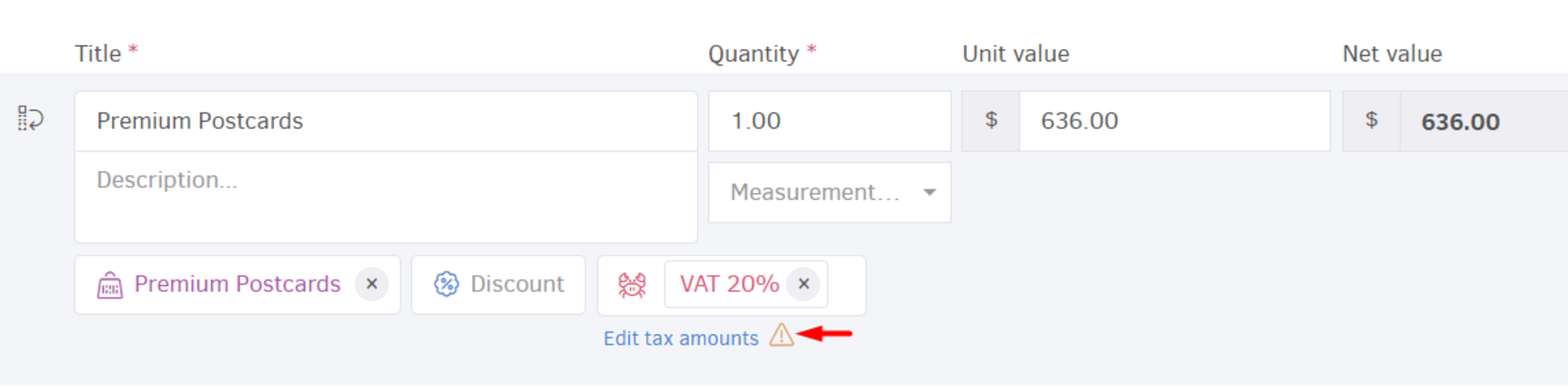
Any products that will be selected from the list of items are thought to have been returned by the customer and will affect Stock (provided that a Warehouse has been selected). In case you need to add products with no effect on your stock (discount or other price adjustment purposes), you could simply select the option Skip stock update.
Hit Add global tax to apply taxes at the document level. When specified, Elorus will calculate this tax as if it had been applied to each line item individually, simplifying the invoicing process and ensuring accuracy. Global tax amount can be set manually, as well. Just click the paddlock and specify.
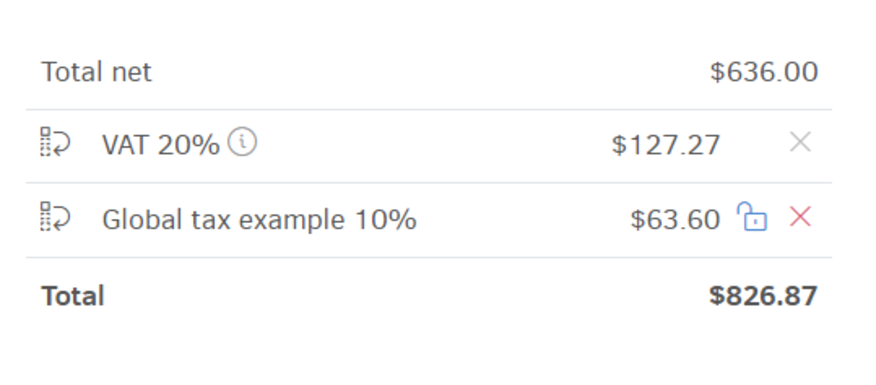
For more details on global and withholding taxes visit the related article.
Continue the process by selecting your desired Template or include additional information in the Public notes and Terms & conditions fields, and then click Save.
Credit note payment
The moment the credit note is in Issued state, you will be able to associate with an invoice of the same client. Click +Add payment > Use credit note as shown below.
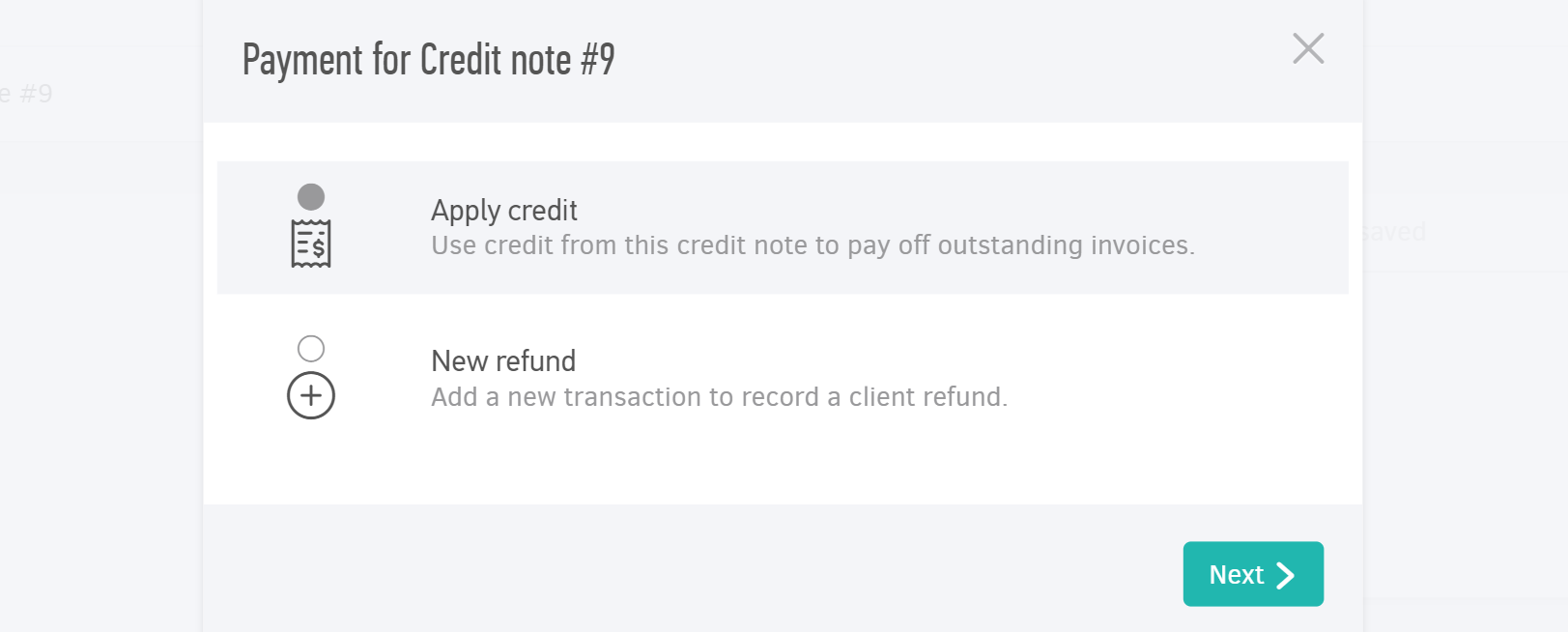
Please note that the payment of a credit document always refers to the refund of the customer for an already paid off invoice. In order for the customer's balance to be right after a refund, you have to reconcile the credit note's value with the value of the invoice.
Creating a credit note via an invoice
In order to save time, you can add a credit note through the sales document page to which the credit is referred.
Just click on (...) and then select Create credit note.
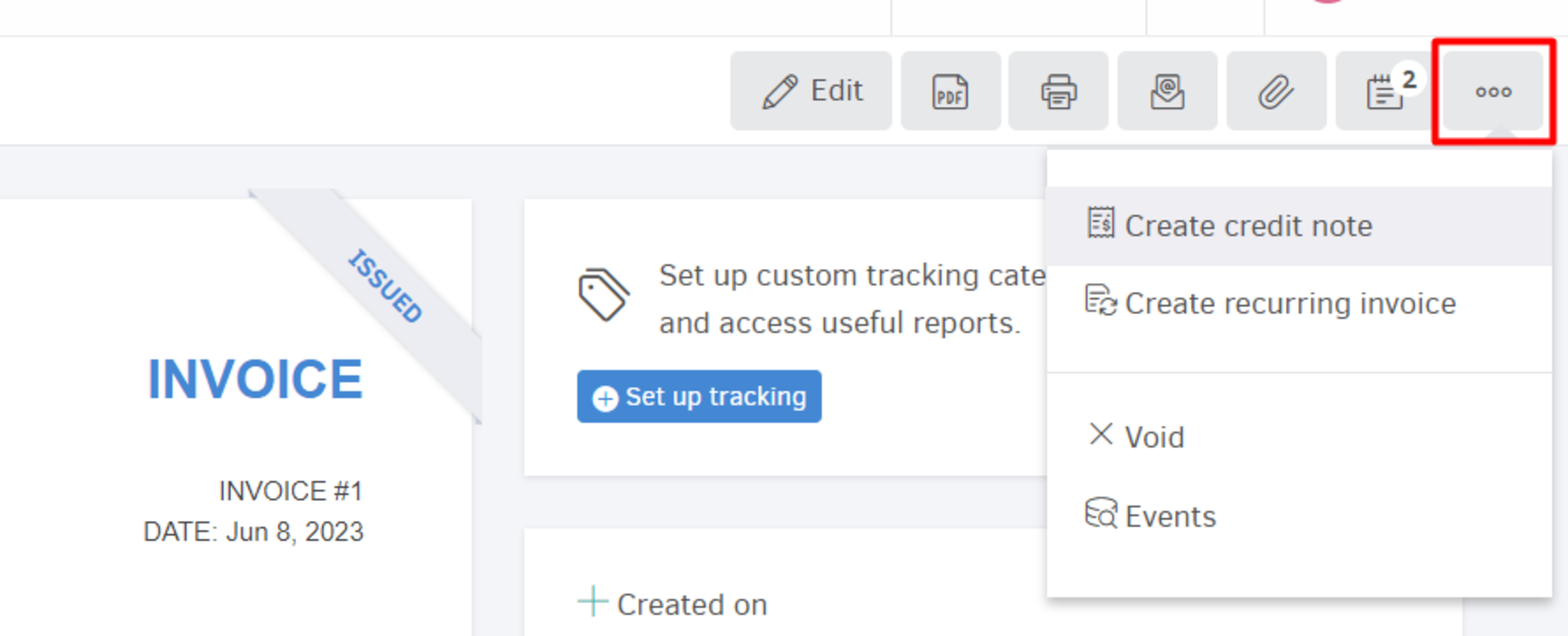
This will take you to the credit note's add page. The invoice is automatically set as a related document and the amounts are pre-filled to save you time. If you wish to edit any of the fields, you can do it at this stage.
By saving as issued, the credit note will be issued and found in the list of credit notes, as well as in sales reports. At the same time, the credit note will be associated with the invoice.
-
For a previously unpaid invoice, this action will be enough to mark both documents as Paid.
-
For invoices that have been paid, the associated credit note will also need to be paid off to signify amounts refunded.